
Candler Projected and Actual Release
A projected date is a calculation based on facts known at the time. For a county sentence, those facts can include the court's confinement term, jail credit, lawful earned time, and any hold. For a state sentence, the record may include a Maximum Release Date, or MRD, and a Tentative Parole Month, or TPM. Neither field should be confused with the date and time that staff complete a release.
The actual release follows a final check of authority, identity, sentence status, and holds. A court may amend a sentence. Another agency may have a detainer, which is a request to hold or transfer the person. A parole decision can change. Earned credit can also change where the rules allow it. The discharge record created after the event is stronger proof than an earlier estimate.
Pretrial custody works differently. A person awaiting trial at Candler County Jail does not have a sentence-based release date. Bond, dismissal, a plea, a court order, or transfer may control the outcome. In that case, check the court and jail event rather than trying to calculate a prison date.
Find Candler County Release Dates
Start with the location and legal status. Candler County Jail holds pretrial inmates and people sentenced for Candler County State Court. GDC handles state prison records. The State Board of Pardons and Paroles controls TPM decisions. Each source answers only its part of the release-date question.
- Determine whether the person is pretrial, serving a county jail sentence, transferred to GDC, or already under parole review. Use a case number, booking date, or GDC ID when known.
- For Candler County Jail, ask the sheriff for the commitment and discharge record and contact the issuing court for the sentencing or bond order.
- For a state prisoner, open the GDC Find an Offender search. Search by name, GDC ID, case number, or other fields offered by the form.
- Review status, facility, sentence information, and any maximum or release-date field. Use identity details to separate similar names.
- Check the Board's TPM Lookup if parole eligibility may affect the date. Treat a TPM as tentative.
- Confirm the result with the responsible jail, court, GDC records office, or Board before relying on it as final.
The Candler County release search provides the broader route for confirming a person who has already left the county jail.
The GDC result must also be read field by field. Current status and facility show whether the person remains in state custody. Sentence identifiers and date fields provide the state computation, while the parole or pardon link points to a separate Board status. A photograph, when available, appears automatically, so match the GDC ID, date of birth, middle name, sex, race, and case details rather than relying on the image or name alone. GDC warns that its online data may be incomplete and directs requests for verification to Inmate Records and Information at P.O. Box 1529, Forsyth, GA 31029. That written route is useful when a displayed Candler-related state date will be used in a court or records matter.
The official GDC offender information page leads to state custody resources.
Open GDC Offender Info to see the state source shown below.
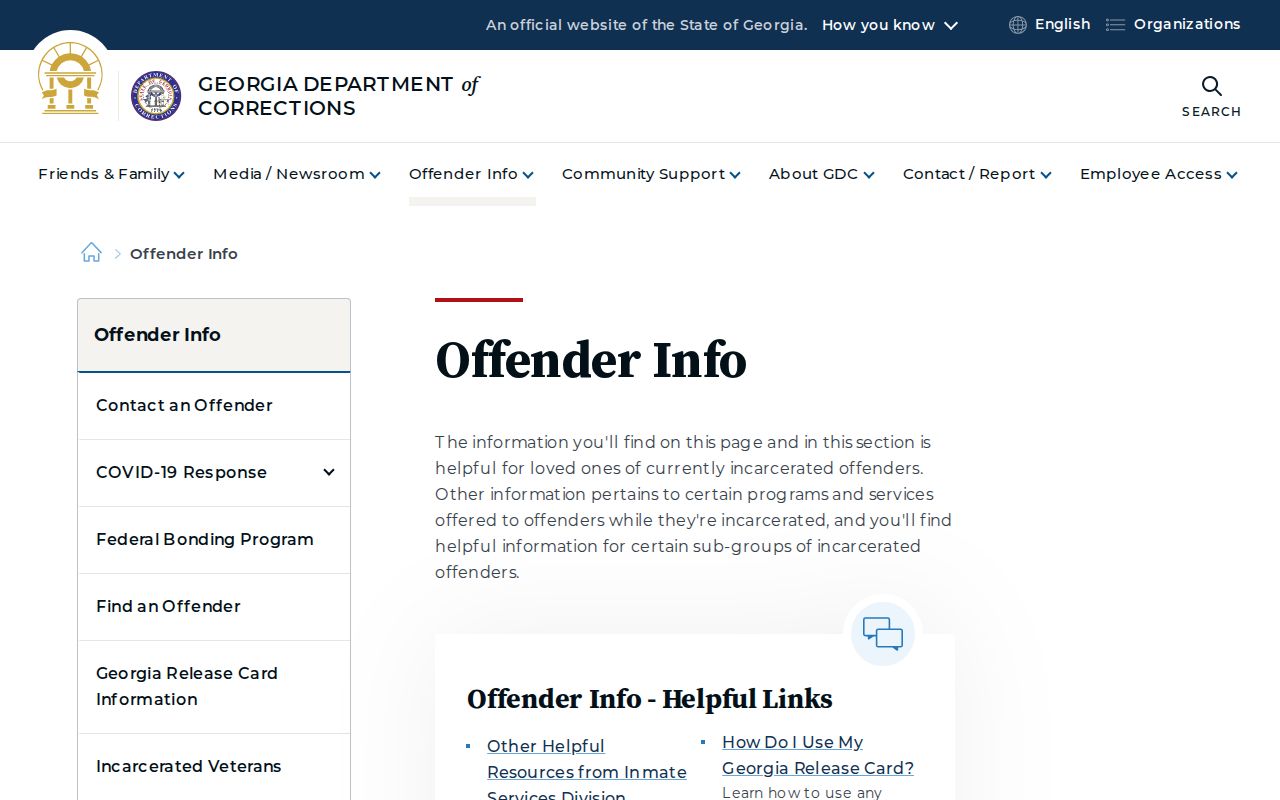
The state source applies to a person in the Georgia correctional system, not to every Candler County jail booking.
Note: A county jail transfer entry may mark departure from Candler custody without showing release to the community.
Candler Release Date Rules Differ
Candler County release dates must be divided into county and state calculations. For a county inmate, the sentencing order, jail credit, holds, and the county earned-time statute govern the calculation. GDC's Performance Incentive Credit program does not calculate a Candler State Court jail sentence. For a state offender, GDC computes sentence dates, while the Board handles parole review.
| Custody type | Primary date source | Possible credit or change |
|---|---|---|
| Pretrial at Candler County Jail | Court order and jail record | Bond, dismissal, plea, hold, or transfer |
| County-sentenced inmate | Sentencing order and sheriff's jail computation | Jail credit and earned time allowed by county law |
| Georgia state prisoner | GDC sentence record and MRD | PIC, court reduction, interruption, or parole |
| Parole-eligible state prisoner | Board TPM Lookup plus GDC record | Board review, conduct, programs, and conditions |
This county-versus-state split is the key Section 19 finding for Candler. Users often mix local jail good time with state PIC points. The two systems have different legal sources, decision makers, and records. Verify which sentence is being served before applying any credit rule.
Candler County Earned-Time Authority
O.C.G.A. § 42-4-7 governs the sheriff's jail record and earned-time authority for certain county inmates. The statute says earned-time allowances may not exceed one-half of the confinement period imposed. It also allows a sheriff or other custodian to authorize up to four days of credit for each day on an authorized work detail, subject to statutory exclusions. A county inmate is released at sentence expiration less earned-time allowances.
That law sets authority and limits. It does not prove that Candler County awards a set amount in every case, and the research did not establish a local blanket practice. The safe calculation starts with the sentencing order, adds credit for time the court or jail recognizes, applies only earned time actually awarded, and checks for holds. Ask the sheriff or sentencing court for the record used in the individual computation.
A narrow records request can ask for the existing jail commitment and discharge entry, the sentencing authority recorded by the jail, and any earned-time or transfer notation that is part of the releasable record. Include the full name, date of birth if known, approximate booking date, and court case number. The sheriff's online request form has an open text field rather than a special projected-date option, so precise wording helps staff identify the record without asking the office to create a new calculation.
- Jail credit
- Time already spent in custody that is credited toward a sentence when legally recognized.
- Earned time
- A lawful reduction tied to the governing county rule and actual award.
- Detainer
- A request by another authority to hold or transfer a person after current custody would end.
- Sentence expiration
- The computed end of the imposed term after valid credits and changes.
Note: Statutory authority for earned time is not proof of the credit awarded in a named Candler County case.
Candler State Release Date Terms
For a person transferred from Candler County to state prison, GDC uses Maximum Release Date. Its terminology page defines MRD, also called “max out,” as the date the sentence imposed by the judge will be completely served. The offender orientation handbook says the court sentence determines MRD and the person serves the full sentence unless parole or a court-ordered reduction applies. An interruption or later sentence action can alter the computation.
TPM belongs to the parole process. The Board sets a Tentative Parole Month for an eligible case after review. The month is not final. It can depend on good prison conduct and successful completion of counseling or other conditions. Misconduct can cause postponement or cancellation. Parole eligibility merely means the Board may consider release, while a TPM marks a tentative review point.
The GDC terminology page provides the state's definition of MRD.
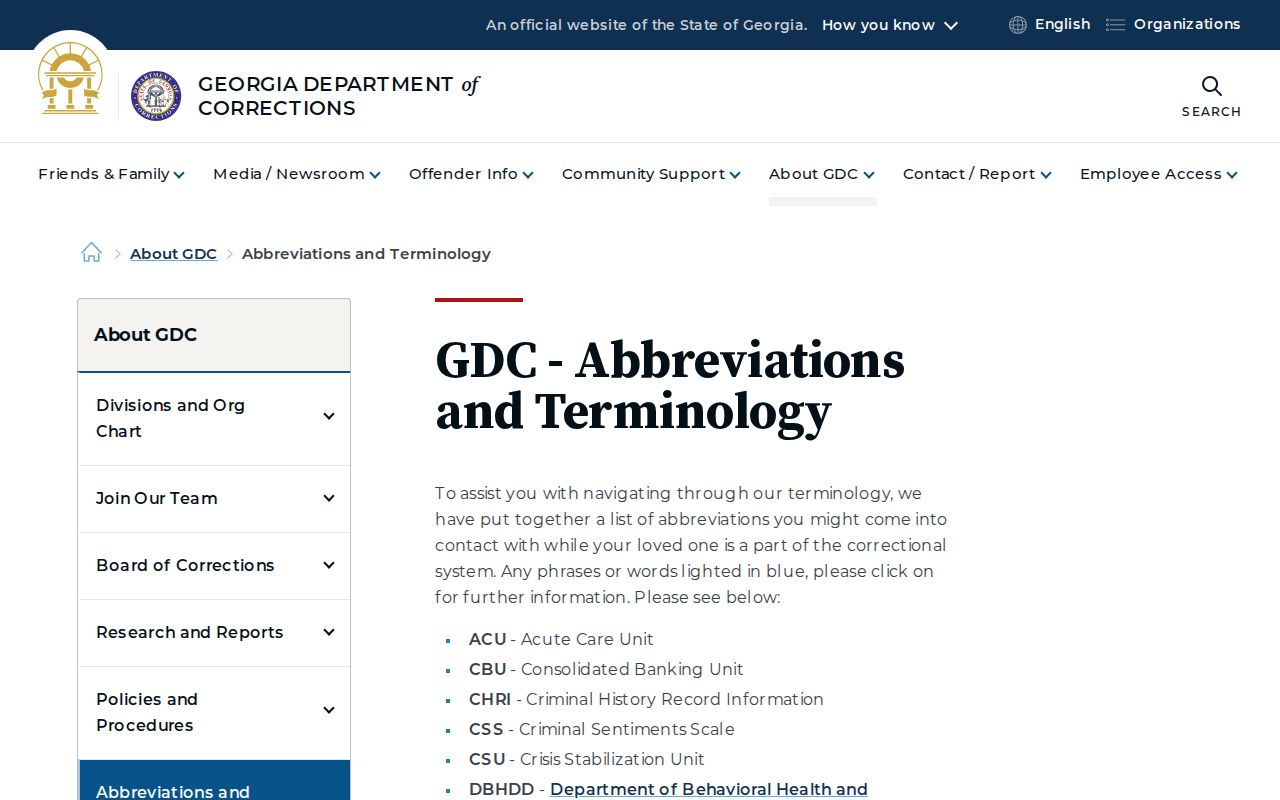
The captured source helps readers recognize MRD as a sentence endpoint, distinct from a possible earlier parole release.
Candler State Dates and PIC
GDC's Performance Incentive Credit program can affect a state offender's TPM or MRD. Eligible people can earn up to 12 PIC points, and GDC says that may produce one to 12 months off a TPM or MRD. Points relate to case-plan work, education or vocational progress, and work or detail assignments. The adjustment is not automatic.
GDC excludes several groups, including people with sentences of two years or less, non-parole-eligible or minimum mandatory sentences, life sentences, and a death sentence. Conduct matters because disruptive behavior can delay program or work completion. A displayed date can therefore move as points are earned, lost in practical effect through missed completion, or applied under program rules.
Georgia's sourced framework uses the court sentence for MRD, Board review for TPM, PIC for eligible state offenders, and offense-specific parole restrictions. Under O.C.G.A. § 42-9-45, Board materials describe a general one-third felony eligibility rule with major exceptions. Eligibility is not an order of release.
Why Candler Release Dates Change
A release-date result is a snapshot. Changes can come from the court, jail, GDC, Parole Board, or another agency. The same factor may matter in one system but not another. For example, PIC applies to eligible state offenders, while county earned time comes from a different statute and local computation.
| Factor | System | Possible effect |
|---|---|---|
| Jail credit | County or state sentence | Recognized prior custody can reduce time remaining. |
| County earned time | Candler county sentence | An actual award may move sentence expiration earlier. |
| PIC points | Eligible GDC cases | May reduce TPM or MRD within program limits. |
| Misconduct or unmet program | GDC or parole review | Can postpone a TPM or block expected progress. |
| Court order | County or state | An amended sentence or reduction changes legal authority. |
| Detainer or hold | Any custody level | May cause transfer instead of community release. |
| Parole decision | State sentence | Grant, denial, set-off, or cancellation can alter timing. |
A set-off means parole is denied for now with a future review point. “Serve to max” means parole is not then planned before MRD, subject to governing rules and later changes. Neither phrase should be converted into a new court sentence.
Confirm Candler Actual Release Dates
After the projected day arrives, return to the agency that held the person. For Candler County Jail, request the discharge entry showing the day and authority for release or transfer. Check the issuing court when bond, sentence completion, dismissal, or probation controlled the event. For GDC, review the updated offender record and request written verification from Inmate Records and Information when stronger confirmation is needed. GDC itself advises users to verify its online information.
Georgia VINE can provide a specific-person custody check or release notice when the participating agency supplies the event. It is an alert tool, not the final sentence computation record. The Candler VINELink inmate search instructions explain registration and the limits of a released result. If another agency has a detainer, the Candler discharge may reflect transfer rather than freedom from all custody.
A sound final record set may require three items: the sentence or court order, the jail or GDC discharge record, and a parole or supervision status when applicable. Their dates may describe different events. Keep each event labeled so a projected release, physical discharge, transfer, and start of community supervision are not mistaken for one another.
Note: A release alert can prompt verification, but the jail, GDC, Board, or court record remains the controlling source.